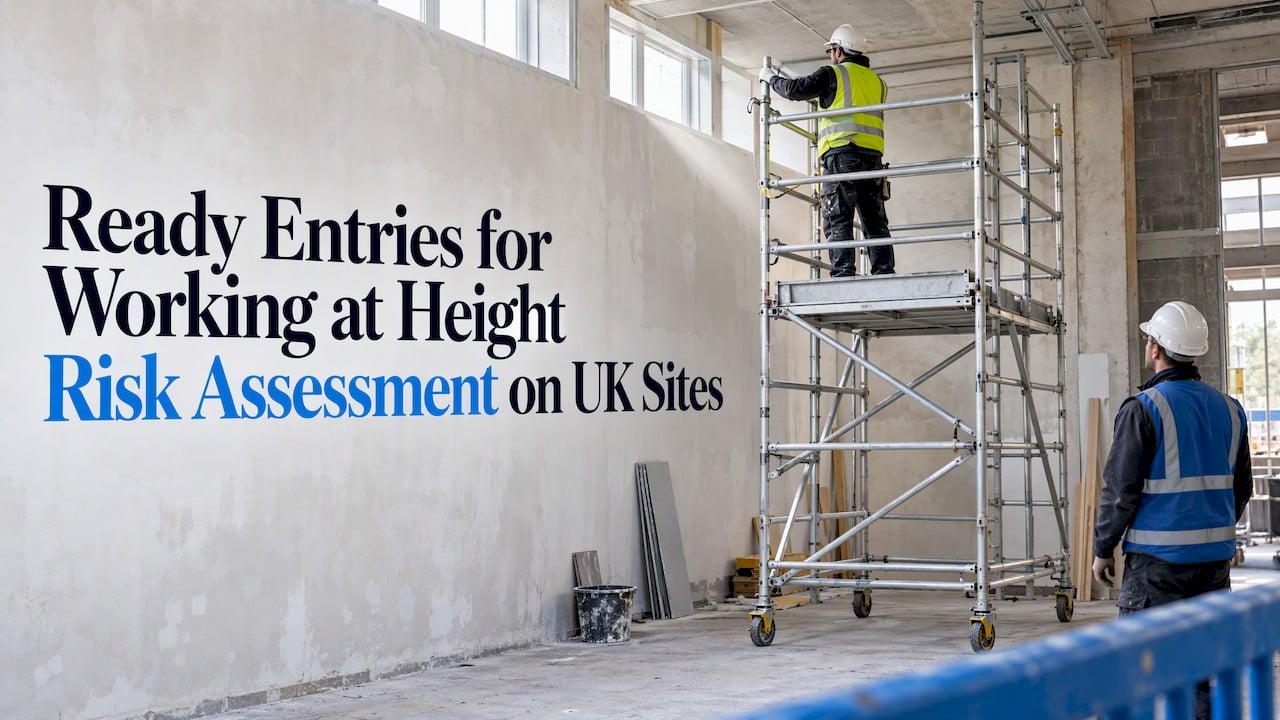
Every employer or self-employed contractor in the UK must produce a suitable and sufficient risk assessment before any work at height begins, following the Work at Height Regulations 2005 hierarchy of avoiding, preventing and mitigating. The assessment has to identify hazards, record who is at risk, specify collective controls wherever practicable, confirm competent supervision and set out rescue arrangements. HSE and PASMA remain the primary guidance sources, and a reliable tower hire supplier such as Scaffold Tower Rental helps you turn those requirements into equipment that is actually on site.
TL;DR:
- Equipment used for tower work must be checked and recorded before each use, with particular attention to weather thresholds like wind speed.
- Risk assessments must be task-specific, detailing hazards, controls, and rescue plans, and reviewed after any site or method change.
- Work at height applies regardless of height if a fall could cause injury, requiring proper planning, supervision, and equipment inspection.
- Using guardrails and stable scaffold towers is recommended for longer tasks, while ladders are acceptable only for short, low-risk activities.
- A competent supervisor with the correct training must oversee work, monitor conditions like wind, and ensure rescue procedures are in place and rehearsed.
Table of Contents
- What to include in a working at height risk assessment
- Legal duties and standards you must follow in the UK
- Step by step workflow for carrying out the assessment on site
- Applying the hierarchy of control and choosing equipment
- Scaffold towers: PASMA guidance, wind thresholds and what to record
- Competence, supervision and inspection obligations
- Emergency and rescue planning to include in your assessment
- Recording, review and when to revise the assessment
- Common assessment mistakes and quick fixes
- Scaffold tower hire that supports a compliant assessment
- FAQ
- Sources
What to include in a working at height risk assessment
A working at height risk assessment needs specific, checkable entries rather than generic statements about “falls from height”. Each entry should describe the task, the people exposed and the exact controls chosen, so an inspector or a new team member can follow the logic without asking questions.
Your document should cover:
- The task description and sequence of work, including how access and egress happen.
- Who is at risk: employees, contractors, members of the public passing beneath the work area.
- Site hazards such as fragile roofs, floor openings, overhead services, uneven ground or wind exposure.
- The equipment selected, its condition and its last inspection date.
- Duration, frequency and the number of people exposed at any one time.
- Controls mapped against the hierarchy of control, with a reason recorded wherever a lower-level control is used instead of collective protection.
- Rescue arrangements and the names of competent supervisors responsible for the task.
Leaving any of these out tends to produce an assessment that looks complete on paper but fails the first time someone asks how a specific hazard was actually controlled.
Legal duties and standards you must follow in the UK
The Work at Height Regulations 2005 apply to any work where a person could fall far enough to be injured, with no minimum height threshold defined. That single fact catches out a lot of employers who assume low-level jobs are exempt.
Your legal duties include:
- Planning the work properly, including weather checks before tasks go ahead.
- Applying the hierarchy of control: avoid the work at height first, prevent falls with collective measures second, and mitigate consequences with personal protective equipment only when the first two are not reasonably practicable.
- Appointing a competent person to supervise under Regulation 5, meaning someone with the right training, knowledge and experience for the specific task.
- Inspecting and recording the condition of equipment under Regulation 12 wherever safety depends on how it was installed or assembled.
HSG33 sets out further detail for roof work specifically, including how to treat fragile surfaces and when a method statement becomes necessary alongside the assessment.
Step by step workflow for carrying out the assessment on site
A structured process keeps the assessment grounded in what actually happens on site, rather than in a template that gets copied from job to job.
- Gather pre-survey information: site plans, previous incident records, equipment manuals and any known hazards such as fragile roof areas or overhead cables.
- Walk the site and check access routes, fragile areas, wind corridors between buildings and the path any tower will need to travel.
- Select controls, starting with collective protection, and write down why any lower-level control was chosen instead.
- Confirm supervision arrangements and set an inspection routine for the equipment while it remains in use.
- Implement the plan, then check it against what is actually happening on site within the first hour of work.
- Review and revise the assessment after any incident, near miss, change of method, change of weather, or change in how often the task is repeated.
Pro Tip: Photograph the site survey findings (fragile roof markings, ground conditions, wind corridors) and attach them to the assessment; a written description alone is harder to defend if the work is ever questioned.
Applying the hierarchy of control and choosing equipment
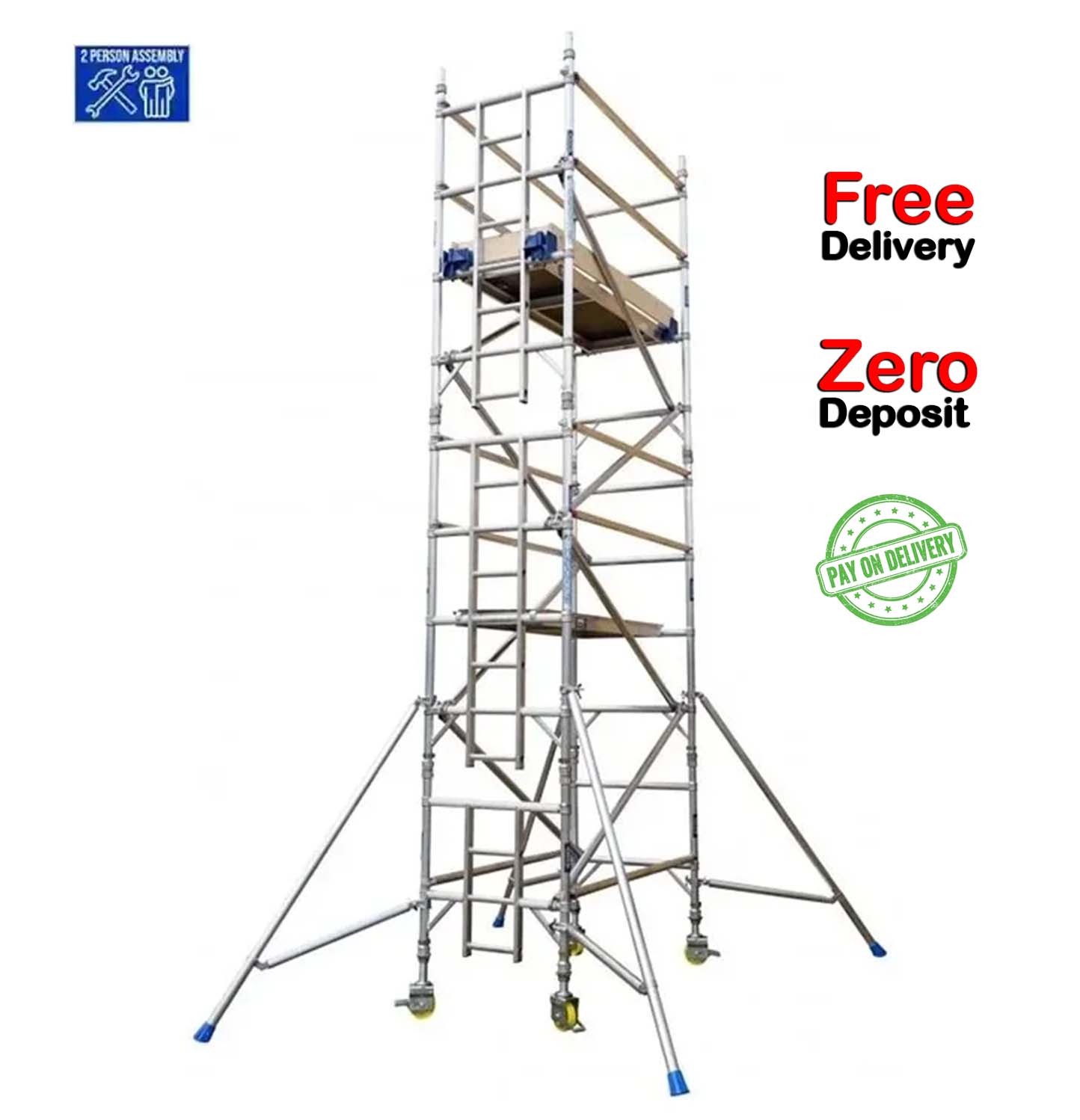
Avoid means asking whether the task can be done from ground level at all, using extendable tools or relocating the work. Prevent means collective protection: guardrails, scaffold towers and edge protection that work whether or not an individual remembers to clip on. Mitigate means personal protection, used only when avoid and prevent are not reasonably practicable for that specific task.
When selecting equipment:
- Scaffold towers and mobile platforms with guardrails count as collective protection and should be the default for repeated or longer tasks.
- Ladders remain acceptable only for short-duration, low-risk work where a tower or platform is not reasonably practicable.
- Every piece of equipment needs an installation check recorded before use and a note of who carried it out.
Scaffold towers: PASMA guidance, wind thresholds and what to record
Tower-specific entries are where assessments most often fall short, because generic risk assessment templates rarely mention wind or assembly method by name. The PASMA operator’s code of practice recommends ceasing work and dismantling towers once wind reaches Beaufort Force 4, a moderate breeze level, and promotes 3T or AGR assembly methods so operators have collective protection during erection and dismantling rather than climbing an unprotected frame.
Your assessment should record:
- The wind threshold adopted on site and who monitors it.
- Confirmation that the instruction manual for the specific tower model is on site.
- Stabilisers fitted as specified, platform height limits respected and no one riding the platform while it is moved.
- The route checked for ground suitability before any tower is wheeled to a new position, since PASMA guidance flags unplanned moves as a frequent cause of tower incidents.
Tower categories such as 3T Industrial Scaffold Tower Hire, Stairwell Towers and general Industrial Scaffold Tower Hire each suit different assessment entries: stairwell towers for confined, repeated ascent and descent, industrial towers for heavier or longer jobs.
Pro Tip: Note wind funnelling between buildings separately from open-site wind readings; narrow gaps can push local wind speeds well past what a nearby forecast suggests.
Competence, supervision and inspection obligations
A competent person is someone with enough training, knowledge and practical experience to recognise the hazards specific to the task, not simply someone who has attended a general course. Record their name, qualification and the date they reviewed the assessment.
Inspection obligations include:
- A pre-use check by the operator every time a tower or platform is assembled or moved.
- A formal inspection recorded at intervals set by Regulation 12, and always after any event likely to have affected its safety.
- A written report kept on file noting condition, any remedial action taken and the date of each inspection.
Emergency and rescue planning to include in your assessment
Relying on the emergency services alone is not sufficient, because rescue from height, particularly from a suspended harness, needs to happen within minutes to avoid suspension trauma. Your assessment must document a specific plan, not a general assumption that help will arrive in time.
Record:
- The exact rescue method for each control in use, whether that is lowering a suspended worker or assisting someone on a tower platform.
- The equipment kept on site for rescue and who is trained to use it.
- Names and responsibilities for rescue, confirmed and, where possible, practised before work begins.
Recording, review and when to revise the assessment
Significant findings, meaning hazards that could cause real harm and the controls chosen to address them, must be recorded in writing as part of the step-by-step approach HSE sets out for managing risk.
Review the assessment whenever:
- An incident or near miss occurs on site.
- The method, equipment or weather conditions change.
- The frequency or duration of the task changes significantly.
A short method-statement note appended to the assessment, covering what changed and why, keeps the record defensible without rewriting the whole document each time.
Common assessment mistakes and quick fixes
Over-generalised assessments are the most frequent failing we come across: a document written once and reused for every job regardless of site conditions. Missing rescue plans and incorrect tower components (wrong stabilisers, no instruction manual on site) are close behind. Checking equipment specification against the task before work starts fixes most of this, and it takes far less time than reworking an assessment after an inspector flags it.
— Dervish
Scaffold tower hire that supports a compliant assessment
A compliant assessment needs equipment that actually matches what you wrote down, and that is where we come in. Our 3T Industrial Scaffold Tower Hire, Stairwell Towers and general Industrial Scaffold Tower Hire all come with guardrails, non-slip platforms and the correct stabilisers fitted, so the equipment entry in your assessment is straightforward to write and easy to defend.
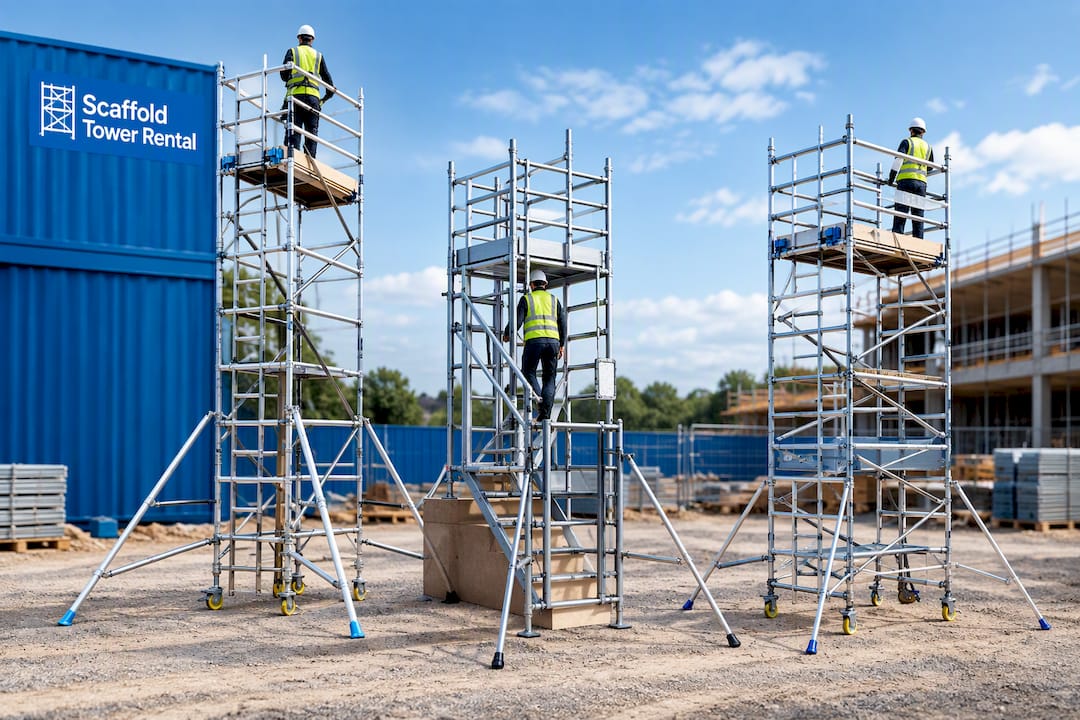
- Fixed collective-protection features mean fewer variables to check and record on site.
- Next-day delivery services can help keep a delayed job from turning into a rushed, under-planned one.
Browse our full range on the scaffold tower hire shop and book the tower your assessment actually calls for.
FAQ
What should be included in a risk assessment for working at height?
A working at height risk assessment should include the task and sequence of work, who is at risk, site hazards, the equipment chosen and its inspection status, duration and exposure, controls mapped to the hierarchy of control, and named rescue arrangements. Leaving out rescue planning or equipment inspection detail is one of the most common gaps.
What are the legal requirements for working at height in the UK?
Employers must follow the Work at Height Regulations 2005, which apply whenever a fall could cause injury regardless of height, and must plan, supervise and inspect the work accordingly. This includes appointing a competent person under Regulation 5 and inspecting equipment under Regulation 12 where safety depends on installation or assembly.
What are the legal requirements for risk assessments in the UK?
A suitable and sufficient risk assessment identifies hazards, decides who might be harmed, evaluates the risk and records significant findings, following the HSE step-by-step approach. The assessment must be reviewed whenever circumstances change, such as a new method, new equipment or an incident.
Can you lift more than 25kg at work?
Manual handling limits depend on the task, the individual and how the load is lifted, rather than a single fixed figure, so this sits outside working at height regulations specifically. For tower assembly, check the component weights in the manufacturer’s manual and use team lifting or mechanical aids where a component is awkward or heavy.
Sources
- HSE — Work at height: The law
- PASMA operator’s code of practice
- Work at Height Regulations 2005 — Regulation 12 (inspection of work equipment)